Overview of the Destination Sedona, Arizona

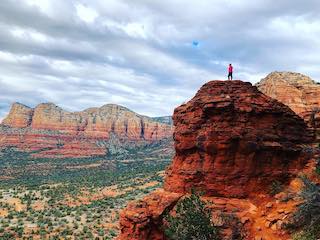
Sedona is located in Arizona’s high desert, under the southwestern rim of the Colorado Plateau. It is strategically situated at the mouth of Oak Creek Canyon. Characterized by massive red rock formations, Sedona is comparable to some national parks.
The City of Sedona was incorporated in 1988. Historically, it was a rural ranching community located far off the beaten path. However, its natural features became widely known through the motion picture industry. Today, the city attracts more than 3 million tourists annually from around the world.
Furthermore, Sedona has a median age of 56, and 48 percent of the population is younger than 55, including families, children, and youth. These factors are important when evaluating the sustainability needs, policies, and practices that should guide tourism development in this destination.
Sedona’s Tourism Industry
Sedona’s successes have led to a vibrant economy, an expansion of employment options and an array of quality-of-life amenities for residents. The Sedona Chamber of Commerce & Tourism Bureau (SCC&TB) has led their tourism and recreation industry. That includes a collection of hotels, timeshares, short-term rentals, restaurants, retail operations, art galleries, outdoor recreation businesses, health & spiritual professionals, and more.
Purpose of the Destination Assessment
While tourism development brings benefits to the destination, it also generates several negative impacts. These include congested roadways, overuse of the Uptown area, a reduction in affordable housing, and competition for services between residents and visitors. Therefore, given Sedona’s natural environment, the overuse of sensitive lands and waterways is a concern.
The GSTC destination assessment does not constitute any kind of verification of the destination’s policies, practices, or status by GSTC. Rather, the objective of the assessment is to provide the destination an overview of current good practices and risk areas. It is also a demonstration of practical application of the GSTC Standard for Destinations. As Sedona follows steps to adopt the GSTC Standard, the destination can better market itself to the world.
Introduction to the GSTC-Destination Standard
What does “sustainable tourism” really mean? How can it be measured and credibly demonstrated to build consumer confidence, promote business prosperity and foster community benefits?
The GSTC-D Standard is an effort to come to a common understanding of what it means to be a sustainable destination. It is the minimum undertaking that any tourism organization, which wishes to be sustainable, should aspire to reach. To satisfy the definition of sustainable tourism, destinations must take an interdisciplinary and holistic approach which includes four main objectives:
A: Demonstrate sustainable destination management
B: Maximize economic benefits to the host community and minimize negative impacts
C: Maximize benefits to communities, visitors, and culture; minimize negative impacts
D: Maximize benefits to the environment and minimize negative impacts
Background on The Sedona Chamber and GSTC
The Sedona Chamber of Commerce and Tourism Bureau (“Sedona Chamber”) therefore, engaged the Global Sustainable Tourism Council (GSTC) to conduct a sustainability assessment. It was conducted on Sedona’s state of tourism development plan. It displayed strategic initiatives for sustainable destination management systems.
The GSTC was established by the UN Foundation, UN Environment Programme(UNEP), and United Nations World Tourism Organization(UNWTO). It is the world’s leading standard-setting body for sustainability of tourism operations and destination development. The GSTC assesses destinations based on the GSTC Standard for Destinations. These standards were determined over a decade of work by international experts and world leaders. They set recommended policies and systems that contribute to sustainable development and operations of host communities.
Overview of the Sedona, Arizona Destination Assessment
GSTC Member Solimar International, led by Chris Seek, conducted the assessment on behalf of the GSTC. The onsite evaluation of Sedona took place from June 6 – 10, 2016. The SCC&TB identified stakeholders for consultation, arranged stakeholder meetings and site visits, and collected policy documents. Jennifer Wesselhoff, President & CEO, and Michelle Conway, Director of Marketing of SCC&TB served as Destination Liaisons throughout this assessment.
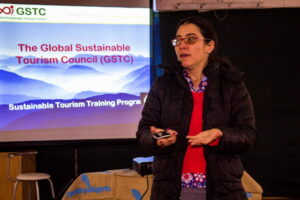
The Assessmentincluded a GSTC Destinations Program Introduction Meeting. It involved both public and private sector stakeholders responsible for the policy areas. Together, they conducted a review of the policy documents to identify gaps in the areas. The GSTC Assessor also conducted site visits to confirm policy implementation.
The GSTC then produced a report outlining the final results and recommendations for improvements. Based on this assessment and other surveys, it is evident that destination sustainability, as well as balancing tourism development with the conservation of natural and cultural resources, is a priority for all sectors in Sedona.
Final Results and Key Takeaways
Of the GSTC’s 41 areas of review, 33 were scored highly (80%). Of the eight standards not being addressed, one of the most significant was the absence of a sustainable destination strategy developed with public participation.
Therefore, the main recommendation for the Sedona Chamber is to better coordinate the various organizations involved in destination management to ensure the sustainable development and management of tourism in Sedona.
Currently, sustainable tourism initiatives are already being implemented within the destination. However, these efforts are largely carried out with limited coordination between the different parties involved. By formalizing a partnership for the implementation of a sustainable destination strategy, greater coordination and impact can be achieved through shared efforts and shared responsibilities.