Overview of Hwaseong Fortress, Suwon City
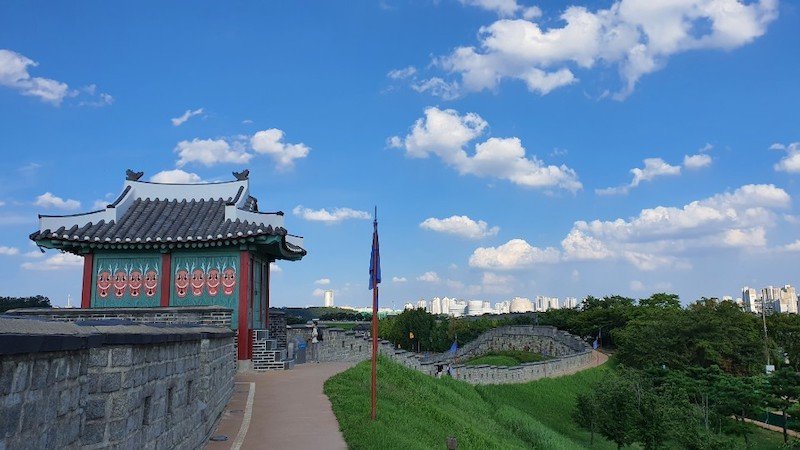
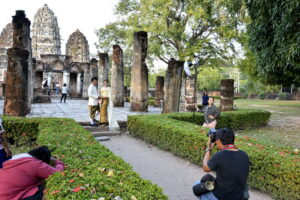
Suwon is known for Hwaseong Fortress. It was constructed at the end of the 18th century and was the largest urban planning project after Hanseong (Seoul). It features a 5.7-kilometer-long castle wall with elaborate urban infrastructure and annexes.
As an UNESCO World Heritage Site, foundations of laws and policies already exist to protect the natural and cultural heritage within the Fortress. Therefore, the recommendations from the GSTC Destination Assessment in Korea strive mostly to strengthen the management systems. This ensures strategic implementation to safeguard the destination from any negative impacts, while still maximizing benefits from tourism.
Details of the GSTC Destination Assessment in Suwon
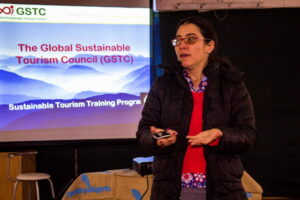
Global Sustainable Tourism Council’s Destinations Program Director, Kathleen Pessolano, conducted an onsite assessment of Hwaseong Fortress from October 2nd – 4th, 2016. The project facilitator was Ms. Eun Young Shin, with assistance from Ms. Suhyeon Park, from the Suwon City Tourism Division.
The assessment evaluated the destination’s policies and practices against the GSTC Destination Standard. Additionally, Dr. Mihee Kang, Consultant to Suwon City Tourism Division, provided expert technical interpretation of Hwaseong Fortress and Suwon’s policies and practices.
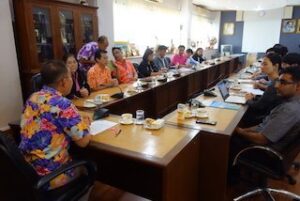
Over the three-day assessment period, GSTC assessors reviewed key policy documents and consulted approximately 20 stakeholders across different sectors. Suwon has since published and shared the assessment outcomes with stakeholders to support transparency around identified challenges and areas of performance. The results are used to support ongoing collaboration on improving weaker areas while strengthening existing sustainability practices.
Objective of the Assessment
Furthermore, the objective of the Global Sustainable Tourism Council Destination Assessment in South Korea is to provide destinations with an overview of current good practices and risk areas. It functions as a practical application of the GSTC’s Standard for Destinations, serving as a reference tool for internal use rather than a standalone evaluation outcome. The process supports destinations in identifying opportunities to refine policies and better align them with internationally recognised sustainability practices.
The Global Sustainable Tourism Conference
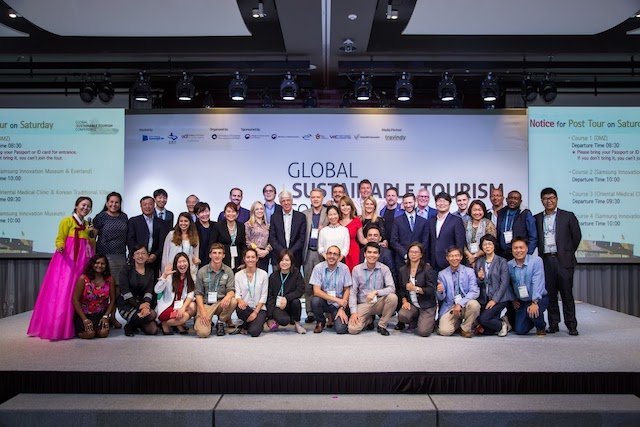
Following the Destination Assessment, participants from the private sector, public sector, NGOs, and academia attended the Global Sustainable Tourism Conference. The Conference took place from October 5-8, 2016, in Suwon City.
Participants came together to exchange contemporary ideas on sustainability that can be translated into action. Global Sustainable Tourism Council partnered with Korean hosts to convene a group of experts in sustainable tourism, enabling networking and the sharing of leading-edge insights across the field.
Receiving ‘GSTC-Recognized Standard’ Status
Additionally, the Global Sustainable Tourism Council has announced that the Sustainable City Tourism Destination Standard for the South Korea has achieved ‘GSTC-Recognized’ status. The Sustainable City Tourism Destination Standard for the Republic of Korea is designed to apply the Global Sustainable Tourism Council Standard as universal principles within the context of cities in South Korea. The Suwon City Tourism Bureau plans to apply the standard initially to its internal sustainability practices, with the intention of encouraging other cities across the country to adopt the standard as well.
Achieving the GSTC-Recognized status means that a sustainable tourism standard has been reviewed by GSTC technical experts and the GSTC Accreditation Panel and deemed equivalent to the GSTC Standard for sustainable tourism.
Suwon’s Commitment to Sustainable Tourism
During the Global Sustainable Tourism Council Destination Assessment in South Korea, Mr. Randy Durband noted that “Suwon’s commitment to sustainable tourism goes far deeper than hosting our recent global conference”.
Furthermore, he stated that “the city intends to build upon current practices, which includes management of its UNESCO World Heritage Centre site, to broaden their tourism offerings and manage it according to established sustainable principles.”
“Suwon has been putting much effort to become a sustainable city, both environmentally and socio-culturally. Now the GSTC Standard will guide us to achieve sustainability in tourism,” said the Mayor of Suwon, Mr. Yeom Tae-young. “We will encourage other cities to join us to become sustainable tourism destinations, as well. That is what we should do for a better life for both present and future generations. As members of GSTC, we would like to collaborate closely with GSTC and to contribute to a more sustainable world.”
GSTC Recognition of Standards and Accreditation of Certification Schemes
The GSTC will continue to work with organizations around the world to provide GSTC Recognition of standards for sustainability in travel and tourism. They will also provide accreditation of certification schemes that use these standards. GSTC-Recognized standard owners are encouraged to complete the GSTC Accreditation process which assures that the certification process used to apply the standard meets international best practice, transparent, and rigor.
Developing sustainable tourism in Korea: