San Vigilio, Italy
Certified by Vireo SRL
By Filippo De Agostini, Sustainability Manager, San Vigilio Dolomites
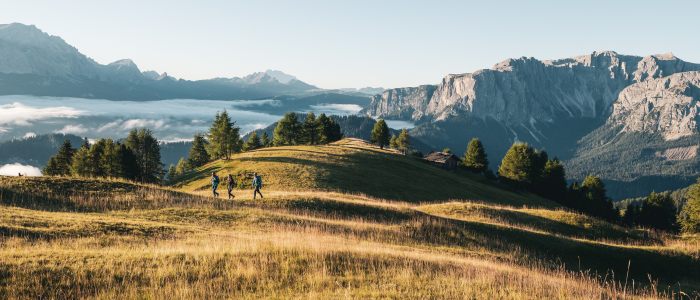
Nestled in the heart of the Italian Alps, San Vigilio Dolomites is a place where unspoiled nature, spectacular mountain landscapes, and a millennia-old culture come together in harmony. This destination, which includes the villages of San Vigilio di Marebbe and San Martino in Badia, lies within two vast Nature Parks, part of the Dolomites, a UNESCO World Heritage site.
Here, life follows the rhythm of the mountains and centuries of Ladin heritage. The community has long lived in close contact with nature, cultivating deep respect for its beauty and strength. As tourism has grown—drawn by the area’s remarkable landscapes—the people of San Vigilio Dolomites have taken on the shared responsibility of protecting both their environment and traditions.
In 2021, San Vigilio Dolomites became the first GSTC-certified destination in South Tyrol, joining a global community committed to sustainable tourism. This milestone reflects a model of shared governance built from the ground up by locals. Tourism here is managed by a Cooperative founded over 50 years ago by a group of stakeholders. What started as an association of hospitality professionals eager to beautify their villages has evolved into a structure overseeing the full spectrum of tourism management.
Although it’s a private enterprise, the Cooperative operates on principles rooted in mountain culture: collaboration, respect for the land, and care for the community. These values, passed down through generations, guide not only how we work with each other, but how we welcome our guests.
The local tourism economy is deeply personal. There are no large, externally owned hotels. Most businesses are family-run, meaning economic benefits stay within the community. This fosters both prosperity and a stronger connection between residents and the tourism they sustain. People are more likely to support what they benefit from directly. And in a place so closely tied to tourism, maintaining this balance is essential. By staying true to our values and working together, tourism remains a source of enrichment for the economy, the culture, and the land.
Tourism Rooted in Respect and Sustainability
Tourism in San Vigilio isn’t about chasing trends or boosting numbers—it’s about making visitors part of the community, even if just for a short time. Here, guests are invited to live with respect and wonder for the mountains that embrace our valley. With fewer than 5,000 residents and nearly 900,000 overnight stays each year, managing this flow is a delicate balancing act that demands foresight and shared responsibility.
The GSTC certification, with its emphasis on continuous improvement, has been instrumental in guiding our destination’s evolution. And our commitment goes beyond the tourism sector. Hospitality businesses, artisans, farmers, and volunteers all contribute to making sustainability a shared value—something not just practiced, but passed on to visitors. Guests are encouraged to travel mindfully: to tread gently on alpine trails, respect wildlife, and embrace local customs.
The Cooperative plays a key role in this ecosystem, identifying best practices and helping accommodations and businesses adopt them. From tracking emissions to reducing waste at fairs, the entire destination is moving in unison. These efforts are visible and appreciated. Refillable water stations replace plastic bottles, signs educate hikers on fragile alpine flora, and guided tours promote environmental awareness.
But perhaps more significant is the growing recognition within the community. At the latest general meeting, even the farmers’ representative—traditionally skeptical of tourism—expressed satisfaction with the Cooperative’s efforts to inform guests about the value of local agriculture and to enforce simple but essential rules of coexistence. It’s a small but meaningful step toward lasting mutual respect between traditional livelihoods and modern tourism.
Preserving Ladin Culture
Equally central to our mission is the preservation of Ladin culture. The Ladin people, who have inhabited this valley for millennia, carry a living heritage and language. Our tourism initiatives are designed to safeguard this identity—whether through architecture that respects the alpine character, support for artisans and local cuisine, or cultural events that celebrate Ladin music, stories, and language.
This respectful approach allows visitors to move beyond passive consumption. They become participants in a living culture—one that values depth over spectacle and tradition over novelty.
Measuring What Matters
The type of tourism we believe in is not a one-way transaction—it’s a relationship. One built on mutual respect, shared responsibility, and real human connection. Visitors don’t just pass through. They step into a living community. And with that comes the need to create the right conditions for responsible tourism to thrive.
Raising awareness is only the beginning. What truly makes a difference are tools and systems that help people make conscious choices easily, without effort or judgment. That’s why we’re building an environment where acting responsibly is the natural thing to do.
This commitment is grounded in observation and dialogue. We monitor sustainability indicators—environmental, social, economic—not just to gather data, but to understand where and how to act. Through participatory processes, we involve the local population to identify challenges and co-develop responses. Sustainability isn’t something imposed from above—it’s built through transparency, listening, and shared values.
Digital innovation is helping too. One of our most promising tools is a sustainability-focused chatbot: a smart, friendly extension of our front office. It offers real-time updates on mobility, suggests alternative routes to avoid congestion, and reminds users of small, meaningful actions that protect nature and local life. In this way, sustainability becomes woven into the journey itself—not an add-on, but part of the experience.
A Different Rhythm of Travel
Our vision prioritizes quality over quantity. We promote longer stays and visits outside of high season, encouraging slower, more meaningful encounters with the land, the culture, and the people. This helps ease pressure on infrastructure and ecosystems, while ensuring tourism contributes to local vitality all year round.
In a world driven by social media and FOMO—the fear of missing out—we invite guests to embrace something different: the joy of slowing down. Not rushing from one attraction to the next but staying present. Because here, the most valuable moments aren’t the ones you post—they’re the ones you feel. The scent of the forest after rain, the quiet of cows grazing on alpine pastures, the way light hits a mountain ridge at dawn—these aren’t things you can rush through.
Stewardship as a Way of Life
We don’t see destination stewardship as a box to tick. It’s an ongoing process, one that evolves, adapts, and responds to the needs of both people and place. When tourism is guided by respect and long-term thinking, it becomes something powerful: a force that doesn’t just generate income, but nurtures landscapes, protects traditions, and strengthens community ties.
In San Vigilio Dolomites, stewardship isn’t a strategy. It’s the way we live.
Living sustainability. Every step. Every season.
This article was featured in the Destination Stewardship Yearbook 2024-2025, a collection of articles from the Destination Stewardship Reports. Co-produced by the Destination Stewardship Center, Center for Responsible Travel, and Global Sustainable Tourism Council.