Destination Stewardship Report – Volume 6, Issue 3
This post is from the Destination Stewardship Report, a publication that provides practical information and insights useful to anyone whose work or interests involve improving destination stewardship in a post-pandemic world.
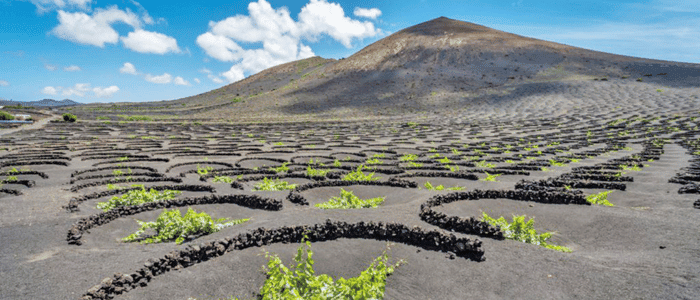
Lanzarote’s Promising Example of Support for Communities
One of Spain’s Canary Islands has established an organized structure for destination stewardship, including strong educational components. With Tiffany Chan, Víctor Fernández Morales describes the process and the results so far.
Collaboration, Community, and Career-Building Refresh This Spanish Island
Lanzarote, in the Canary Islands, was declared a UNESCO Biosphere Reserve in 1993. The island hosted the First World Conference on Sustainable Tourism in 1995 and later adopted the GSTC Destination Criteria in 2012. A February 13-14, 2025 gathering developed the Epicentro Lanzarote program, intended to enhance regional awareness of sustainable, regenerative tourism.
Set up in partnership with GSTC and focused on the island and its people as primary beneficiaries, the program prioritizes tourism value rooted in natural, social, and cultural resources and shaped by all stakeholders—anyone affecting or affected by tourism, on or off the island.

The approach demands traceability linking good practice to proportional return, demonstrating that value to the planet is economically sound, while also seeking to generate good practices transferable to other destinations. As such, Lanzarote fosters social peace, local pride, and balance, all of which is captured in its “Lanzarote, Unique Island” ethos.
Epicentro Lanzarote is built on co-governance. Turismo Lanzarote leads as the primary DMMO, with La Buena Huella handling technical coordination, alongside GSTC, the UN Global Compact Spain, and stakeholders from industry, academia, third sector, public administration, and civil society.
The project advanced through these phases:
- Coordination: SPEL-Turismo Lanzarote, GSTC, and UN Global Compact Spain formed a Working Group to approve a roadmap with milestones, timelines, and collaborative decisions.
- Participation: Representatives from all tourism interest groups in Lanzarote, including industry professionals, academia, business associations, the third sector, public administrations, civil society, and the DMMO team participated.
- Training: GSTC expert Natalia Naranjo trained the local representatives on the GSTC Destination and Industry Standards.
- Construction: Teams selected challenges, trained tourists and locals, and built two solution matrices, one for tourists and one for locals.
- Normalization: Each matrix organized good practices under Education, Management, and Promotion categories, detailing environmental, social, and cultural impacts for each, as well as returns in governance, profitability, tourism quality, and visitor appeal.
- Connection: The matrices aligned practices to the GSTC Destination Standard and UN 2030 Sustainable Development Goals.
Co-governance and open participation are the strengths of Epicentro Lanzarote. The Toolkit Epicentro Lanzarote (pdf) is available online.

Governance, Environment, and Social Impact
Since the toolkit’s development in 2025, Epicentro Lanzarote has achieved measurable outcomes across these areas:
- Stakeholder Engagement: Robust involvement has led to tangible actions, including an ESG strategic plan by Tías Town Hall, a sustainability roadmap from the Líneas Romero Foundation, and the Lanzarote Tourism Federation’s commitment to the Glasgow Declaration, through which more than 20 tourism companies adopted a decarbonization plan.
- Destination Management: Monitoring and management are enhancing protection at vulnerable sites, such as discouraging tourists from throwing objects into the Jameos del Agua pond or walking outside designated paths in Timanfaya National Park.
- Environmental Impact: The Ecological Transition Plan focuses on reducing energy and water use, supported by preventive on-site monitoring to minimize visitor-related risks.
- Knowledge Sharing: Three visual decalogue-style guides – aimed at locals, tourists, and professionals – are being published to share regenerative tourism best practices.
- Institutional Momentum: Epicentro contributed to the 30th anniversary of the First Charter of Sustainable Tourism, culminating in the adoption of the updated Charter of Sustainable Tourism +30 with UNESCO support.
- Tourism Careers: Interest in tourism careers is rebounding, with rising enrollment at the Lanzarote University School of Tourism. The program fits within an island-wide strategy for local people to develop their personal and professional lives in Lanzarote.
Social Inclusion in Action
Epicentro Lanzarote also works in synergy with the Competitive Regenerative School, which links vulnerable individuals to socially inclusive tourism companies. In Spain, tourism contributes significantly to GDP, yet companies struggle to find motivated workers. At the same time, many individuals face social exclusion. The School seeks to attract such people, train them, and connect them directly with tourism companies.
The short, intensive, practical programs combine classroom instruction and on-the-job training – one-third of the time for classroom and two-thirds for practical experience – building competence in digital skills, corporate social responsibility, and role-specific functions. The School also tackles barriers such as stigma, lack of trust, and structural inequalities. Mentors guide participants and companies throughout the process.
The School tracks the number of participants hired and retained after six months. In 2024, the school logged a 70% employment rate among participants, with a dropout rate of 4% and 100% graduation. Economic impacts are tangible. For example, a restaurant with an additional trained staffer can serve more diners, generating thousands of extra euros per month. Public administration sees increased revenue and reduced aid dependency.
Beyond metrics, the School fosters pride, motivation, long-term autonomy, and a renewed sense of purpose among participants. It reflects Lanzarote’s regenerative tourism approach by linking social inclusion with competitiveness, a stronger workforce, and community well-being. The model has already been replicated in Mallorca and Valencia.
Models for the Future
Together, Epicentro Lanzarote and the Competitive Regenerative School illustrate a powerful, integrated approach that aligns environmental stewardship, social equity, and economic performance. By prioritizing co-governance and measurable outcomes, Lanzarote offers a compelling model for destinations worldwide seeking to move from sustainable to truly regenerative tourism.